Seen the news lately? Here's your news round up for the past month, and the next month:
1. Swine flu - We're all going to die AAAAAAAAAAAA!!!
2. Drought - No crops, we're all going to die AAAAAAAAA!!!
3. Terrorists - We're all going to die AAAAAAAAAA!!!
4. Pakistan - We're all going to die AAAAAAAAAA!!!
5. Naxalism - They're going to take over the naxal belt, then the rest of India, we're all going to die AAAAAAAAAA!!!
Not to say that these issues are not important, but really, do we need to be told all the time that we're all going to die?
(On a related note, I like how news channels have debates on 'Has the Swine Flu problem been blown out of proportion?'. We all know who's been screaming that we're all going to die.)
(On an unrelated note, an exoplanet with a retrograde orbit has been discovered recently. In case you missed the half second of screen time that this (newsworthy) bit got, here's a link.)
Tuesday, 18 August 2009


Thursday, 6 August 2009
The drivel that is 2.0
I've been using the internet since the early days of the technology in India. When 28.8kbps was decent. When 56.6kbps was blazing fast. When a 1MB file took an hour (or more) to download. I distinctly remember when HTML4 was the 'in' thing. I've coded some websites myself...
Over the past couple of years, the one thing that disturbs me is the emergence of the so called 'Web 2.0'. It's supposed to be this revolution in the way web sites are designed. And it is. It has made web sites glossy, cool and hard to use. Don't get me wrong- people who know me will appreciate that I'm all for the 'this looks awesome for no reason' funda. But not at the cost of usability. During the last year, two websites I frequent , CricInfo and The Inquirer, have undergone a significant facelift. For starters, the experience was horrendous in the first few days after the switch. And even so, after I got used to the new 2.0 interfaces, I have not noticed any real improvement in the usability of either site.
The only change I have observed is that the sites are now more bandwidth intensive (which does not really bother me since I'm on broadband, but you don't leave the tap open just because you get 24hrs water supply, do you?). They look flashy and cool, but the sole reason I go to these sites is the fact that they had excellent content. I fail to see how web 2.0 is a value addition.
I know it appears like I'm now cribbing about inconsequential things, but since you've held on for so long, I'll leave you with another revelation (it was to me, anyway). I have been used to the internet as it was for many years, almost a decade now. Web 2.0 makes me feel technologically retarded. Maybe this is what growing old feels like. When the young can adapt so easily to the new world, while the old struggle to keep up... I think those of you who have been online since as long as I have will appreciate what I say. Those of you who who are relatively new will simply have to wait for a few years before you too can feel old and feeble!
One thing's for sure, I know what my mum feels like when she comes across a computer.
Over the past couple of years, the one thing that disturbs me is the emergence of the so called 'Web 2.0'. It's supposed to be this revolution in the way web sites are designed. And it is. It has made web sites glossy, cool and hard to use. Don't get me wrong- people who know me will appreciate that I'm all for the 'this looks awesome for no reason' funda. But not at the cost of usability. During the last year, two websites I frequent , CricInfo and The Inquirer, have undergone a significant facelift. For starters, the experience was horrendous in the first few days after the switch. And even so, after I got used to the new 2.0 interfaces, I have not noticed any real improvement in the usability of either site.
The only change I have observed is that the sites are now more bandwidth intensive (which does not really bother me since I'm on broadband, but you don't leave the tap open just because you get 24hrs water supply, do you?). They look flashy and cool, but the sole reason I go to these sites is the fact that they had excellent content. I fail to see how web 2.0 is a value addition.
I know it appears like I'm now cribbing about inconsequential things, but since you've held on for so long, I'll leave you with another revelation (it was to me, anyway). I have been used to the internet as it was for many years, almost a decade now. Web 2.0 makes me feel technologically retarded. Maybe this is what growing old feels like. When the young can adapt so easily to the new world, while the old struggle to keep up... I think those of you who have been online since as long as I have will appreciate what I say. Those of you who who are relatively new will simply have to wait for a few years before you too can feel old and feeble!
One thing's for sure, I know what my mum feels like when she comes across a computer.
Friday, 24 July 2009
Pastime
I have just realised that I have developed a silly pastime when I'm riding. I tend to aggressively overtake guys with their girlfriends pillion behind them to see if they will try to return the manoeuvre. Childish social experiment? Yes. Fun? Absolutely!
Friday, 3 July 2009
Don't Panic!
With that reference to the lord of humour, I'm going to talk today, about braking on wet roads. A lot of people tend to fall while riding on wet roads. This has a lot to do with the manner in which the brakes are applied on a two wheeler. Most people believe that on wet roads you must forgo the use of the front brake and use only the rear brake. This, is a very risky thing to do. I'm going to explain, with the help of a little bit of mechanics, how brakes should be used in the wet (or even dry).
Before we get to the braking though, a few general tips. The water on the road reduces the friction between the road surface and your tyres. While riding on a road with a little bit of water (i.e. not standing water), the water will tend to reduce the friction (or grip) available to you by about 15%. So, for starters, ride about 20% slower than you would on dry roads. Secondly, maintain distance between the vehicle in front of you. On a dry road, I remember rearset saying somewhere that you should maintain a distance to the vehicle in front of you such that you can see the tyres of that vehicle. On a wet road, extending this distance further, as much as a car length is a good idea. Additionally, avoid riding on anything that is not tar/concrete, i.e. painted signs, tiles, metal manhole covers, etc. That 5% difference in grip may be the difference between you being on the bike and on the ground.
Now, on to the braking part. Consider a two wheeler travelling on a stretch of road,

In the picture above, imagine the long straight line to be the body of your two wheeler. Consider four frictional forces in that figure. Fft and Ffb are the frictional forces at the tyre-road interface and brake respectively for the front wheel. Similarly, Frt and and Frb are the frictional forces at the tyre-road interface and brake respectively for the rear wheel.
In order to slow down the bike, without causing a wheel to lock up, the frictional force at the tyre-road interface must exceed the force applied by the brake at all times. As long as Fft exceeds Ffb, the frictional force at the tyre-road interface will force the tyre to keep rotating. If Ffb becomes higher that Fft, the tyre will simply stop rotating and lock up. This would imply that you should apply equal, but limited pressure on both brakes to brake safely. There is another factor though. The moment you start braking, the body of the bike tends to lurch forward due to inertia. This motion compresses the front shock absorbers and allows the rear shocks to expand. So, once you start braking, the picture changes to this,
 Shocks are not perfect, and therefore will transmit force (even though they're supposed to absorb it). Therefore, you now have a state where there is a greater load on the front wheel than there is on the rear wheel. This means that Fft now greatly exceeds Frt. It is easy now to lock up the rear wheel, and correspondingly hard to lock up the front wheel, because the limiting values of Ffb and Frb have also changed.
This is the reason why bikes always have a stronger brake on the front wheel. The explanation above holds for dry and wet weather. The correct method for braking therefore, is to start braking with only the rear brake. Once weight transfer to the front begins, slowly start using the front brake, and reduce the pressure on the rear brake. This ensures that you're less likely to lock up either wheel.
Don't Panic
If you understood what I just said, you should be less likely to lock up the front wheel. Rear wheel lock ups are still possible. If you do lock up the rear, whatever you do, don't panic. Because the front wheel still isn't locked, chances are that you'll still be going in a straight line. Gently release the rear brake, more often than not, it'll start rotating again.
Always be prepared to fall. There's no technique in the world that can ensure that you'll never fall. You WILL fall, all you can do is to reduce the frequency. When you are open to the possibility of falling, if you do fall, you'll probably get up, pick up the bike and start riding again. If you believe that you can never fall, when you do, you'll be too stunned to do anything about it.
That does it for my first biking techniques post. Feedback on whether or not that was coherent and understandable is welcome.
Before we get to the braking though, a few general tips. The water on the road reduces the friction between the road surface and your tyres. While riding on a road with a little bit of water (i.e. not standing water), the water will tend to reduce the friction (or grip) available to you by about 15%. So, for starters, ride about 20% slower than you would on dry roads. Secondly, maintain distance between the vehicle in front of you. On a dry road, I remember rearset saying somewhere that you should maintain a distance to the vehicle in front of you such that you can see the tyres of that vehicle. On a wet road, extending this distance further, as much as a car length is a good idea. Additionally, avoid riding on anything that is not tar/concrete, i.e. painted signs, tiles, metal manhole covers, etc. That 5% difference in grip may be the difference between you being on the bike and on the ground.
Now, on to the braking part. Consider a two wheeler travelling on a stretch of road,

In the picture above, imagine the long straight line to be the body of your two wheeler. Consider four frictional forces in that figure. Fft and Ffb are the frictional forces at the tyre-road interface and brake respectively for the front wheel. Similarly, Frt and and Frb are the frictional forces at the tyre-road interface and brake respectively for the rear wheel.
In order to slow down the bike, without causing a wheel to lock up, the frictional force at the tyre-road interface must exceed the force applied by the brake at all times. As long as Fft exceeds Ffb, the frictional force at the tyre-road interface will force the tyre to keep rotating. If Ffb becomes higher that Fft, the tyre will simply stop rotating and lock up. This would imply that you should apply equal, but limited pressure on both brakes to brake safely. There is another factor though. The moment you start braking, the body of the bike tends to lurch forward due to inertia. This motion compresses the front shock absorbers and allows the rear shocks to expand. So, once you start braking, the picture changes to this,
 Shocks are not perfect, and therefore will transmit force (even though they're supposed to absorb it). Therefore, you now have a state where there is a greater load on the front wheel than there is on the rear wheel. This means that Fft now greatly exceeds Frt. It is easy now to lock up the rear wheel, and correspondingly hard to lock up the front wheel, because the limiting values of Ffb and Frb have also changed.
This is the reason why bikes always have a stronger brake on the front wheel. The explanation above holds for dry and wet weather. The correct method for braking therefore, is to start braking with only the rear brake. Once weight transfer to the front begins, slowly start using the front brake, and reduce the pressure on the rear brake. This ensures that you're less likely to lock up either wheel.
Don't Panic
If you understood what I just said, you should be less likely to lock up the front wheel. Rear wheel lock ups are still possible. If you do lock up the rear, whatever you do, don't panic. Because the front wheel still isn't locked, chances are that you'll still be going in a straight line. Gently release the rear brake, more often than not, it'll start rotating again.
Always be prepared to fall. There's no technique in the world that can ensure that you'll never fall. You WILL fall, all you can do is to reduce the frequency. When you are open to the possibility of falling, if you do fall, you'll probably get up, pick up the bike and start riding again. If you believe that you can never fall, when you do, you'll be too stunned to do anything about it.
That does it for my first biking techniques post. Feedback on whether or not that was coherent and understandable is welcome.
Wednesday, 1 July 2009
Whuh!?
The scenario:
Meeting a couple of friends over lunch. Harsh and I decide to give her a framed photo of the three of us, (taken before lunch) after lunch. The plan is laid out, Harsh makes the tricky part of getting her to pose with us for a pic before lunch rather easy. We gave the camera to one of the dudes at the restaurant. He took a decent pic, except for the fact that the three of us didn't really fill up the frame. Then, part 2. I faked a phone call and walked out of the restaurant with the camera in my hand (she didn't notice, yay!). Smooth until now.
I walk unto Main street, and choose to walk into one of the Fotofasts there (there are two, don't ask me why). I spent ten minutes there, just standing, because there was some sort of miscommunication between a customer and the woman in the store and now they were arguing about it. Annoyed by this point, I walked out and walked into the other Fotofast.
I placed an order for the photo we had just taken. I asked her the cost. She told me. Wasn't much, and was appropriate for the size. Then I thought it would be nicer if the photo was cropped, so that we would fill up more of the frame. So I casually asked the woman whether she could crop it. I assumed it would be like 15-20 rupees. She tells another woman there to 'calculate' the cost of cropping an 8x10 photo. I'm already 'wtf' in my head. Cropping is cropping, on a digital image it takes a few seconds to do and is irrespective of the size of the print! After performing her lengthy calculations, she tells me, 'It'll cost you Rs. 226.'
WHAT!?
1. This is robbery because they do not add anything worth Rs. 226 while cropping a DIGITAL photo. It takes a couple of seconds to do.
2. This is robbery because they want to charge for cropping according to the size of the final print!
Meh, I could come up with a hundred reasons why this is robbery. I obviously chose not to be robbed, and asked the thief... err... woman from fotofast to print the photo as is. Result,
I was unintentionally rude (only for a couple of awkward seconds though) to a friend of the recipient (because I was annoyed).
Happily though, the recipient really liked our gift!
Next time you go to get prints, avoid fotofast, the fiends. I find that 1 Hour Photo yields good results and is very affordable too.
Meeting a couple of friends over lunch. Harsh and I decide to give her a framed photo of the three of us, (taken before lunch) after lunch. The plan is laid out, Harsh makes the tricky part of getting her to pose with us for a pic before lunch rather easy. We gave the camera to one of the dudes at the restaurant. He took a decent pic, except for the fact that the three of us didn't really fill up the frame. Then, part 2. I faked a phone call and walked out of the restaurant with the camera in my hand (she didn't notice, yay!). Smooth until now.
I walk unto Main street, and choose to walk into one of the Fotofasts there (there are two, don't ask me why). I spent ten minutes there, just standing, because there was some sort of miscommunication between a customer and the woman in the store and now they were arguing about it. Annoyed by this point, I walked out and walked into the other Fotofast.
I placed an order for the photo we had just taken. I asked her the cost. She told me. Wasn't much, and was appropriate for the size. Then I thought it would be nicer if the photo was cropped, so that we would fill up more of the frame. So I casually asked the woman whether she could crop it. I assumed it would be like 15-20 rupees. She tells another woman there to 'calculate' the cost of cropping an 8x10 photo. I'm already 'wtf' in my head. Cropping is cropping, on a digital image it takes a few seconds to do and is irrespective of the size of the print! After performing her lengthy calculations, she tells me, 'It'll cost you Rs. 226.'
WHAT!?
1. This is robbery because they do not add anything worth Rs. 226 while cropping a DIGITAL photo. It takes a couple of seconds to do.
2. This is robbery because they want to charge for cropping according to the size of the final print!
Meh, I could come up with a hundred reasons why this is robbery. I obviously chose not to be robbed, and asked the thief... err... woman from fotofast to print the photo as is. Result,
I was unintentionally rude (only for a couple of awkward seconds though) to a friend of the recipient (because I was annoyed).
Happily though, the recipient really liked our gift!
Next time you go to get prints, avoid fotofast, the fiends. I find that 1 Hour Photo yields good results and is very affordable too.
Tuesday, 23 June 2009
IT IS NOT THE DILSCOOP
Or 'the Dilshan' or anything of the sort. Common sense states that a shot should be named after the guy who thought of it. SO CALL IT THE MARILLIER SHOT. Because Douglas Marillier thought of it. And Douglas Marillier is one of the coolest people to have played any game (in the same league as Marat Safin, Shahid Afridi, Jacques Villneuve, Juan Pablo Montoya, Andréas 'KixeR' Sjölander etc.)
Remember that it is the Marillier shot!
Remember that it is the Marillier shot!
Monday, 15 June 2009
In defence of fictional violence
I've been playing a lot of Grand Theft Auto IV lately. For the uninitiated, here's the sort of stuff that you do in a typical one hour of playing GTA,
> Use the choicest and most vulgar language
> Break traffic rules
> Run over people on the road
> Rob people
> Shoot at people
> Kill people
> Run from the police
> Kill some police
> Drink
> Watch many characters do drugs

I'm sure some namby-pamby idiot is going to go running the moment he sees this post and insist that GTA be banned. It makes our youth bloodthirsty and violent. It's the reason that children are turning more and more towards the gun as an answer to all of life's problems.
And here I am, defending this violent, anti-establishment, anti-social game. And why not? For starters, the game carries an 18+ certification. Beyond that age, I understand that, by law, people are free to do what they like. To tell you the truth though, I played my first GTA (San Andreas) a couple of years before I turned 18. A friend of mine (L, to be precise) was playing his first GTA (Vice City) in his early teens I think... What does this tell you? Him and I, we've no history of physical violence. In the nine years I've known him (since before the time we became teenagers) I can recall not one incident of any violence, whether instigatory or retaliatory, on his part or mine. That can mean one of two things, either I'm lying (which makes this post pointless, so you've got to trust me on this), or that playing GTA has not altered our mental state in any way.
The question then arises, why aren't we out on the streets smoking, drinking, doing drugs, getting into fights, eve teasing etc. like the rest of my (metaphorical) brethren? Why am I not going to college with guns to shoot people I don't like? Why doesn't the ever-patient L never get impatient and beat someone to a pulp? We're no saints. I'm not going to say that the thought of punching someone's teeth off never crossed our minds. But there was this other thing. It's called a conscience. You would think that anyone with a decent upbringing would have his/her conscience bite him in the backside long before he/she killed someone.
That's it isn't it. Upbringing. There's your revelation. It's not GTA (or a hundred games of the sort (we still <3 you Duke Nukem) ) that make people violent. It's a bad upbringing. And all that these parents are doing, is shirking their responsibility and blaming a bunch of hard working and talented game designers for their mistakes.
So where does it begin? It begins when these modern day parents mollycoddle their precious (and pathetic) children and make them utter wimps. When you're a wimp, it's suddenly very cool to get into a physical fight, isn't it? Then, while you're mollycoddling these children, you don't pay any real attention to them. So these kids, who have learnt no values (but have learnt that they must only drink purified water for their safety) turn to games to pass their time. And that's where they pick up these violent themes.
Other targets for irresponsible parents include Tom and Jerry (too violent for our precious children), Speedy Gonzalez (makes our little weepy children racist), which are, hold your breath, CARTOONS!
Here's an excellent suggestion for these foolish parents, if you don't want your children to become violent, STOP FREAKING HAVING CHILDREN IN THE FIRST PLACE. It's parents like you that are making this world a more miserable place.
PS: Notice how arguments as compelling as the one above can be made for each of the targets that such parents have - cartoons, action movies, vulgar movies, violent movies, etc.
> Use the choicest and most vulgar language
> Break traffic rules
> Run over people on the road
> Rob people
> Shoot at people
> Kill people
> Run from the police
> Kill some police
> Drink
> Watch many characters do drugs
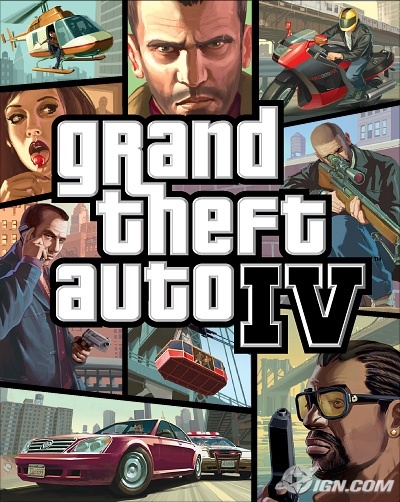
I'm sure some namby-pamby idiot is going to go running the moment he sees this post and insist that GTA be banned. It makes our youth bloodthirsty and violent. It's the reason that children are turning more and more towards the gun as an answer to all of life's problems.
And here I am, defending this violent, anti-establishment, anti-social game. And why not? For starters, the game carries an 18+ certification. Beyond that age, I understand that, by law, people are free to do what they like. To tell you the truth though, I played my first GTA (San Andreas) a couple of years before I turned 18. A friend of mine (L, to be precise) was playing his first GTA (Vice City) in his early teens I think... What does this tell you? Him and I, we've no history of physical violence. In the nine years I've known him (since before the time we became teenagers) I can recall not one incident of any violence, whether instigatory or retaliatory, on his part or mine. That can mean one of two things, either I'm lying (which makes this post pointless, so you've got to trust me on this), or that playing GTA has not altered our mental state in any way.
The question then arises, why aren't we out on the streets smoking, drinking, doing drugs, getting into fights, eve teasing etc. like the rest of my (metaphorical) brethren? Why am I not going to college with guns to shoot people I don't like? Why doesn't the ever-patient L never get impatient and beat someone to a pulp? We're no saints. I'm not going to say that the thought of punching someone's teeth off never crossed our minds. But there was this other thing. It's called a conscience. You would think that anyone with a decent upbringing would have his/her conscience bite him in the backside long before he/she killed someone.
That's it isn't it. Upbringing. There's your revelation. It's not GTA (or a hundred games of the sort (we still <3 you Duke Nukem) ) that make people violent. It's a bad upbringing. And all that these parents are doing, is shirking their responsibility and blaming a bunch of hard working and talented game designers for their mistakes.
So where does it begin? It begins when these modern day parents mollycoddle their precious (and pathetic) children and make them utter wimps. When you're a wimp, it's suddenly very cool to get into a physical fight, isn't it? Then, while you're mollycoddling these children, you don't pay any real attention to them. So these kids, who have learnt no values (but have learnt that they must only drink purified water for their safety) turn to games to pass their time. And that's where they pick up these violent themes.
Other targets for irresponsible parents include Tom and Jerry (too violent for our precious children), Speedy Gonzalez (makes our little weepy children racist), which are, hold your breath, CARTOONS!
Here's an excellent suggestion for these foolish parents, if you don't want your children to become violent, STOP FREAKING HAVING CHILDREN IN THE FIRST PLACE. It's parents like you that are making this world a more miserable place.
PS: Notice how arguments as compelling as the one above can be made for each of the targets that such parents have - cartoons, action movies, vulgar movies, violent movies, etc.
Subscribe to:
Posts (Atom)